


 EN
 ไทย


Customers Also Purchased




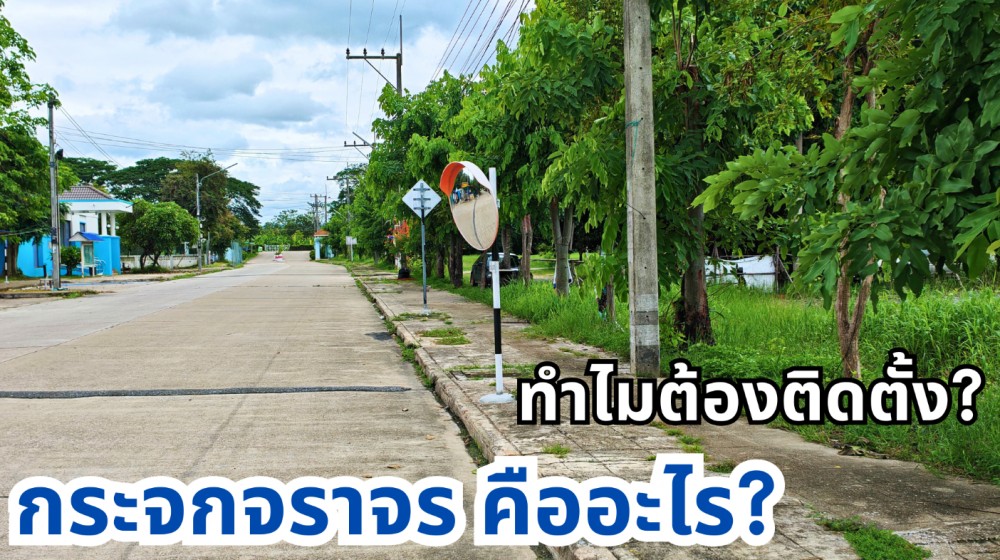
Have you ever driven out of a narrow alley and couldn't see how fast oncoming traffic was approaching? Or worried about what might be around a sharp hairpin turn? We believe many people have definitely experienced these situations. And that heart-stopping feeling is often what easily leads to accidents. Fortunately, there is a great helper that many people might overlook, which is "Traffic Mirrors" or what some people might call "curved mirrors." Today, we will discuss what these mirrors are, why we need them installed along roads, and how they help keep us safer. Let's take a look!
What Is a Traffic Mirror? How Does It Provide Visibility?
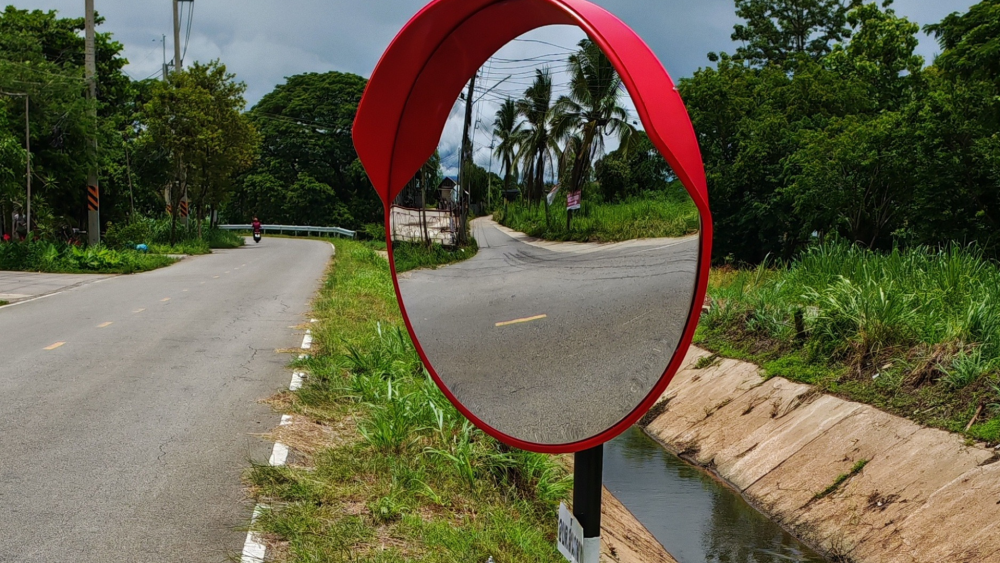
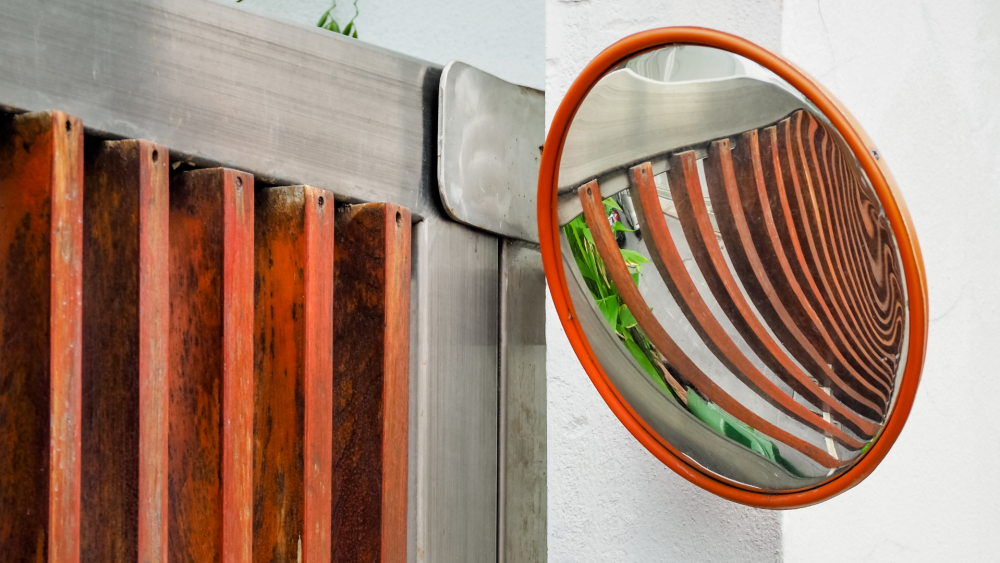
Those convex mirrors that we see at intersections, curves, or in parking lots—that's what Traffic Mirror they are. It's not a flat mirror like the one we look at our reflection in, but a mirror that isbulging outwarda bit like a fisheye, or sometimes spherical, hemispherical, or even rectangular-convex.
Its uniqueness lies in this curved, convex surface. Because this curvature is what allows it tocapture a much wider viewthan ordinary mirrors. If we stand in front of a traffic mirror, we will see the road or surrounding area from a much wider angle, allowing us to see far more—even things in blind spots that cannot be seen directly with the naked eye.
As for the materials used, there are several types, whether plastics like Acrylic or Polycarbonate which are durable and do not shatter as easily as real glass, though they might scratch a bit easier. Or sometimes they are made ofreal glass,which provides a crystal-clear reflection, but is fragile and breaks easily upon hard impact. Sizes range from small to very large, depending on where it will be installed and how wide a field of view is needed.
Why Install Traffic Mirrors? Are They Really Necessary?
Many people might wonder, "It's just a mirror, why is it such a big deal?" But in reality, traffic mirrors are extremely important—so essential that many locations are required to have them installed. They effectively solve major road hazards we face, as follows:
- Seeing through "Blind Spots": This is one of the main reasons why traffic mirrors are so important. Blind spots are areas completely hidden from view, whether looking directly or through your vehicle's side mirrors. These spots are commonly found at obstructed intersections (such as those blocked by walls, trees, or buildings), sharp blind curves, or even parking lot exits and narrow alley mouths with many visual obstructions. With traffic mirrors installed, you can clearly see approaching cars, motorcycles, or pedestrians emerging from these blind spots, giving you time to react and avoid the risk of collisions.
- Lifesavers at "Unsignalized Intersections": Small roads or residential villages often lack traffic lights, requiring extreme caution when crossing intersections or making turns. Traffic mirrors step in to help you see approaching traffic from the other side before nosing your vehicle out, making decisions much easier and safer.
- Dangerous Curves: Hairpin bends and crest curves: These curves are extremely hazardous because you cannot see what lies ahead—whether it's oncoming traffic, a broken-down vehicle, or even an animal running across. Having a traffic mirror at these curves provides an overview of the road ahead before you actually turn in, allowing you to reduce speed, prepare, or sound your horn in time.
- In Parking Lots and Parking Garages: Imagine navigating a crowded shopping mall or a packed parking garage with narrow lanes. Traffic mirrors help you clearly spot other vehicles turning in or out, effectively reducing scrapes and collisions in tight spaces.
- In Industrial Factories or Large Warehouses: These environments see heavy movement of forklifts and large transport vehicles, which inherently have significant blind spots. Installing traffic mirrors along walkways or intersections within the facility allows forklift operators to see workers and other vehicles clearly, making operations much safer.
- For Pedestrians and Cyclists: It's not just motor vehicles that need visibility. Walkways, bike paths, and busy pedestrian crossings also have blind spots. Installing traffic mirrors helps drivers and motorcyclists see pedestrians and cyclists more clearly, encouraging greater caution to prevent accidents.
How do traffic mirrors improve safety? How do they work?
The key principle of a traffic mirror is "Field of View Expansion" As mentioned, its surface is convex. When light hits and reflects off it, the reflected image appears slightly smaller, but the coverage areabecomes significantly wider.substantially.
Imagine standing at an intersection and looking into a traffic mirror: you can see an overview of both converging roads entirely, even if parts of them are obstructed by walls. The image in the mirror might appear somewhat distant or smaller, but the crucial point is that you willsee which direction cars or motorcycles are approaching from. Giving you enough information to decide whether to wait for traffic to clear or turn out safely.
Simply put, traffic mirrors mainly help improve our safety in these ways:
- Reduces blind spots: This is the core benefit. It helps us see blind areas normally hidden from view—whether it's oncoming vehicles, pedestrians, or obstacles—giving us enough time to react and avoid accidents.
- Provides time to react: When we see incoming hazards in advance, we have more time to decide what to do next: whether to apply the brakes, slow down, or switch lanes. Having that time to think is critical in preventing accidents.
- Reduces the risk of collisions: With a wider field of view and more time to react, the chances of collisions are significantly reduced.
- Boosts driving confidence: A clearer view of your surroundings makes driving more relaxed and eliminates the anxiety of wondering if something might suddenly pop out.
- Serves as a safety reminder: The presence of a traffic mirror serves as an implicit warning sign saying, "Blind spot ahead, be careful!" This naturally encourages drivers to be more vigilant.
Which type of traffic mirror should you choose?
Traffic mirrors come in several types, each with its own pros and cons. Let's see which one fits your installation location best.
1. Acrylic (Clear Plastic)
- Pros: Lightweight, much more impact-resistant than glass, and won't shatter into small sharp pieces if hit.
- Disadvantage: Scratches more easily and can become cloudy over long periods of use.
- Suitable for: General areas without heavy impacts, such as shopping mall parking lots, schools, or residential communities.
2. Polycarbonate (Ultra-Tough Plastic)
- Pros: Extremely durable! Even more impact-resistant than acrylic, virtually unbreakable, and handles sun and rain exceptionally well.
- Disadvantage: The price is higher than acrylic, and it can still get scratched.
- Suitable for: Areas at high risk of vandalism, such as places where people often throw objects, factories, or areas with highly unpredictable weather.
3. Glass (Real Mirror)
- Pros: Provides the clearest image, just like looking into a real mirror, and does not scratch easily.
- Disadvantage: The most fragile type; breaks easily if subjected to strong impacts.
- Suitable for: Areas with low risk of impact or where extremely high image clarity is required.
4. Stainless Steel
- Pros: The most durable; shatterproof, rust-resistant, and withstands all weather conditions.
- Disadvantage: The reflection may distort more easily than other types, is not quite as sharp, and it is also heavy.
- Suitable for: Areas at high risk of vandalism or tampering, or extremely harsh environments like ports or chemical plants.
Additionally, some models alsocome with a sun visor / hoodto help reduce glaring sunlight during the day, or sometimes feature aHeated Mirror for very cold climates so that fog or ice doesn't build up. Heated models aren't popular in Thailand though—needless to say why (it's blistering hot!), as Thailand isn't a snowy country and doesn't get ice buildup.
How to install traffic mirrors for the best results?
Choosing and installing traffic mirrors in the right spot is just as important.
- Choose the right size: If you want visibility from further away, the mirror needs to be larger. Usually, there are charts indicating which size suits which viewing distance.
- Choose the right material for the environment: If it is an area where children run around and play, or where there is a risk of thrown rocks, choose high-impact-resistant materials like polycarbonate or acrylic.
- Choose the right location: It must be mounted high enough to be seen without being blocked by other vehicles, and positioned at an angle that provides the clearest view of the blind spot.
- Proper height: Mostly, it is installed at a height of about 2.5 - 3 meters from the ground to ensure comprehensive visibility.
- Adjust the angle precisely: After installation, try adjusting the mirror angle properly so drivers get the clearest overall view of blind spots.
Minor limitations of traffic mirrors (that you should know)
Although traffic mirrors are extremely useful, they do have a few minor limitations you should be aware of.
- Images may be slightly distorted: Due to its convex curve, the image seen in the mirror may appear smaller than actual size or slightly distorted, potentially leading to misjudged distances. Drivers should exercise caution and slow down in areas with traffic mirrors.
- Glare: If installed in a spot exposed to direct blazing sunlight, glare can be blinding. Choose the location carefully or opt for mirrors with anti-glare properties.
- Requires regular cleaning and maintenance: Traffic mirrors are just like regular mirrors; if covered with excessive dust, dirt, or scratches, visibility will be impaired. Regular cleaning is necessary.
- Not an excuse for carelessness: Remember that traffic mirrors are only supplementary aids. They do not mean you can drive carelessly. Driving with caution, slowing down at dangerous spots, and obeying traffic rules remain paramount.
Traffic mirrors are the little heroes you shouldn't overlook!
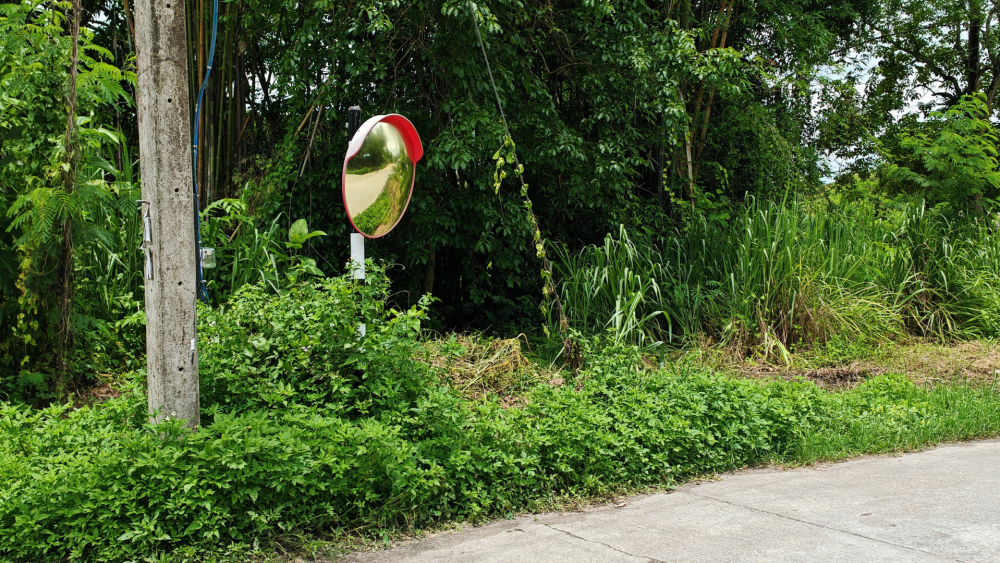
You see, Traffic Mirror traffic mirrors, while seemingly simple and devoid of complex technology, have genuinely saved countless lives and massively reduced road accidents by expanding fields of view and revealing blind spots. Whether at the entrance of an alley, an intersection near a school, or even inside a factory, traffic mirrors are "Eyes" that help us see what we cannot otherwise see, acting as silent guardians protecting our lives and those of our fellow travelers on the road.
So, the next time you drive through a blind spot and catch a glimpse of a convex mirror, remember that it's a fellow traveler always keeping you safe! What about you? Has a traffic mirror ever saved your life? Feel free to share your experience!