


 EN
 ไทย



Customers Also Purchased
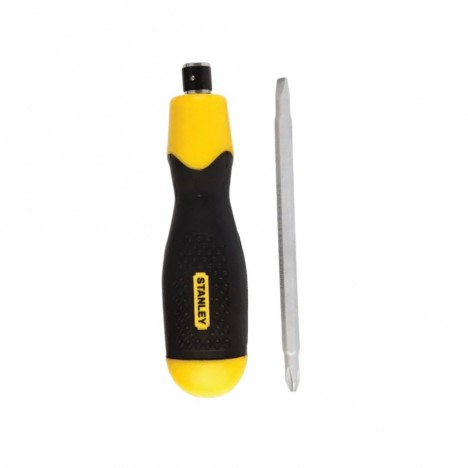

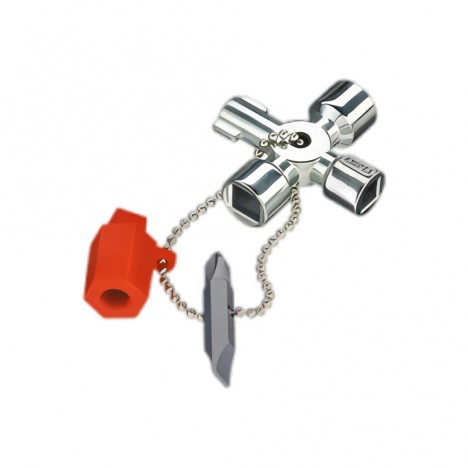
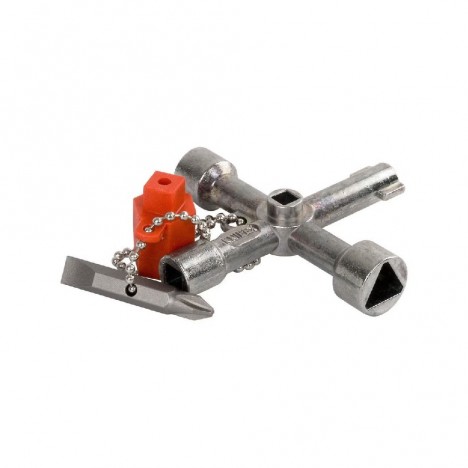


Screwdrivers are designed to tighten or loosen screws. These tools come in many sizes, shapes, and types. Typical differences between screwdriver types include the handle, shaft, and tip (or head), as well as the driving force applied. Each type of screwdriver is meant for specific tasks. To help you choose the right screwdriver for your needs, we have gathered everything you need to know in this article. If you're ready, let's dive in!
What is a screwdriver? What is it used for?
Screwdrivers It is a basic hand tool that practically everyone is familiar with, as it's a popular staple found in almost every home. Used for disassembling equipment or tightening and loosening nuts and screws to assemble parts together, it's no wonder why every household needs to have a screwdriver on hand.
The screwdriver originated from humble beginnings
Let me take you back in time a bit. It is believed that the screw was invented around 400 BC by Archytas of Tarentum, the "Father of Mechanics" and a Greek philosopher. And as expected, the use of screw threads was essential... for pressing olive oil and grape juice. Later, screw threads were developed and applied to regulating water levels.
It is believed that the screwdriver was invented around the late 15th century. Back then, most screws and screwdrivers were handmade by wood craftsmen, so shapes and sizes naturally varied according to necessity.
Thus in 1568, when Jacques Besson (a French inventor) invented a screw-cutting machine for lathes, the use of bolts and screws began gaining popularity. Once England's Hindley of York company perfected Besson's screw-cutting plate and made it widely accessible, the number of applications surged rapidly. As we entered the Industrial Revolution, the demand for and production of screws and screwdrivers increased. This rising demand led to new designs continuously developing up to the present day.
Screwdriver Anatomy
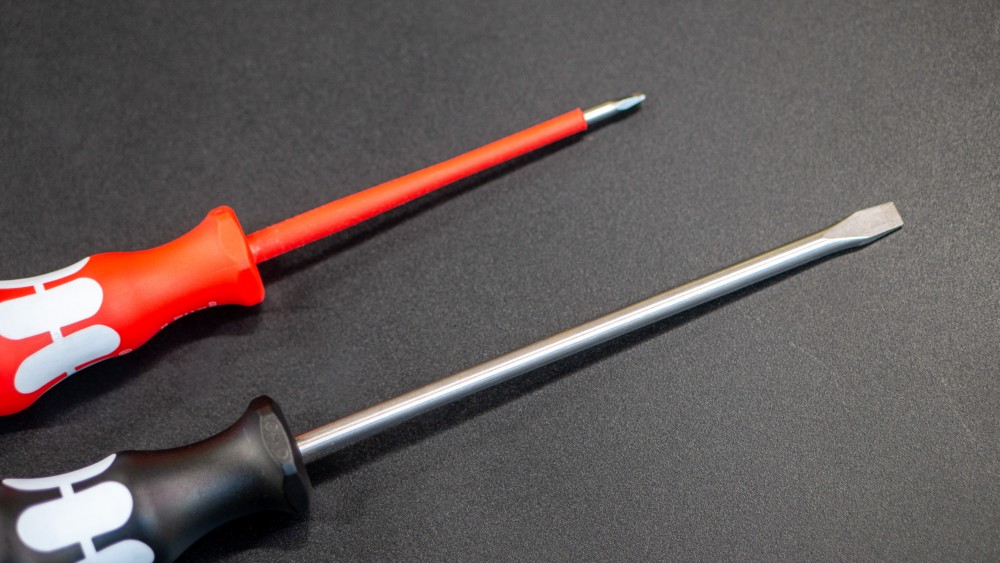
A screwdriver consists of 3 main parts: the handle, the shank, and the tip. To accommodate a variety of screws, requirements, and environments, screwdrivers feature different characteristics across these components.
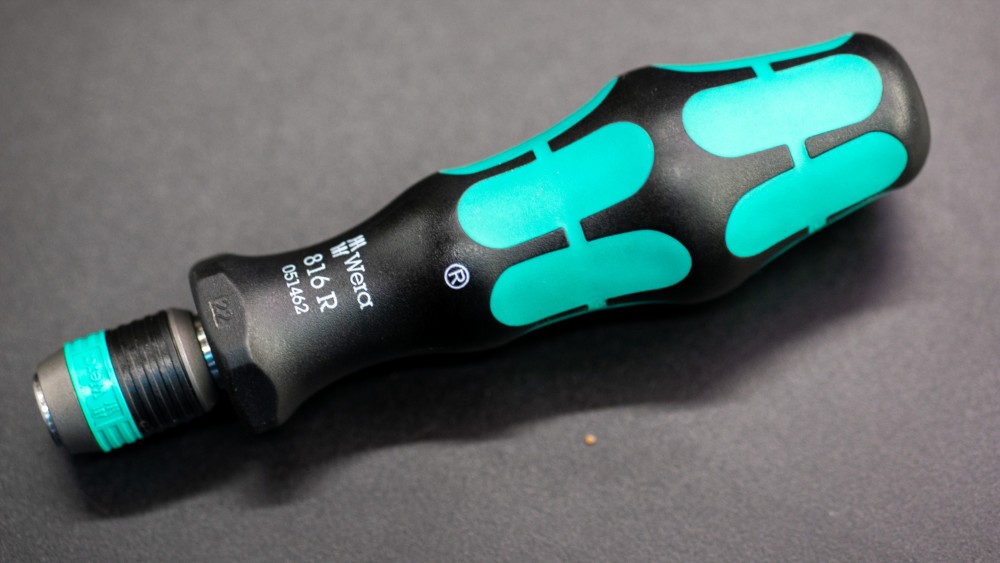
Screwdriver handle
There are key requirements that affect the shape and material of the screwdriver handle, all of which are essential to its use: comfort, precision/control, and safety.
Softer, ergonomic screwdriver handles with padded cushioning are more comfortable for extended use and reduce hand fatigue. However, harder handles, while less comfortable, are easier to control and thus provide greater precision. Because wood is inexpensive, easy to shape, a natural insulator, and comfortable to hold, it is a popular choice. Beech, ash, or hickory are commonly used due to their durability and wear resistance. To help protect the wood and provide a smoother finish, wooden handles are also often coated or lacquered.
Generally, screwdriver handles are often made of plastic. The type of plastic depends on the application; options include cellulose acetate, acrylonitrile butadiene styrene (ABS), polypropylene (PP), polycarbonate (PC), and nylon. Overall, the advantages of using plastic are that it is easy to mold, wear-resistant, corrosion-resistant, solvent-resistant, durable, lightweight, and inexpensive.
Next are rubber screwdriver handles. In applications involving oil, high torque, or significant vibration, rubber handles make using the screwdriver much more enjoyable. But for applications requiring higher precision, some screwdriver handles may be made from high-quality metal.
Screwdriver blade
The screwdriver shank extends from the handle, and to suit various tasks, shanks come in different lengths. Most screwdriver shanks are made of steel and are round or hexagonal in shape. But just like the handle, the type of steel also depends on the screwdriver's intended purpose.
- Carbon steel is often used for budget-friendly screwdrivers. Although it possesses inherent strength and hardness, carbon steel is not particularly durable. Therefore, you may want to use carbon steel for light-duty tasks that do not require much effort.
- Cr-Mo steel: Screwdriver shanks are often made of chromium-molybdenum (Cr-Mo) steel, which is more expensive, offers better wear resistance, and provides a balanced combination of strength, toughness, and corrosion resistance.
- Chromium-vanadium (Cr-V) steel, which is exceptionally strong, wear-resistant, and corrosion-resistant, is also commonly used in the automotive industry for parts, tools, and fasteners.
- Stainless steel: Occasionally, you might see stainless steel screwdriver shanks, typically used when corrosion resistance is especially critical. However, this comes at the expense of hardness. Of course, heat treatment can be used to improve toughness, hardness, strength, and wear resistance, but as you would expect, these will be more expensive and ultimately become specialized tools for tradespeople.
Screwdriver Tip
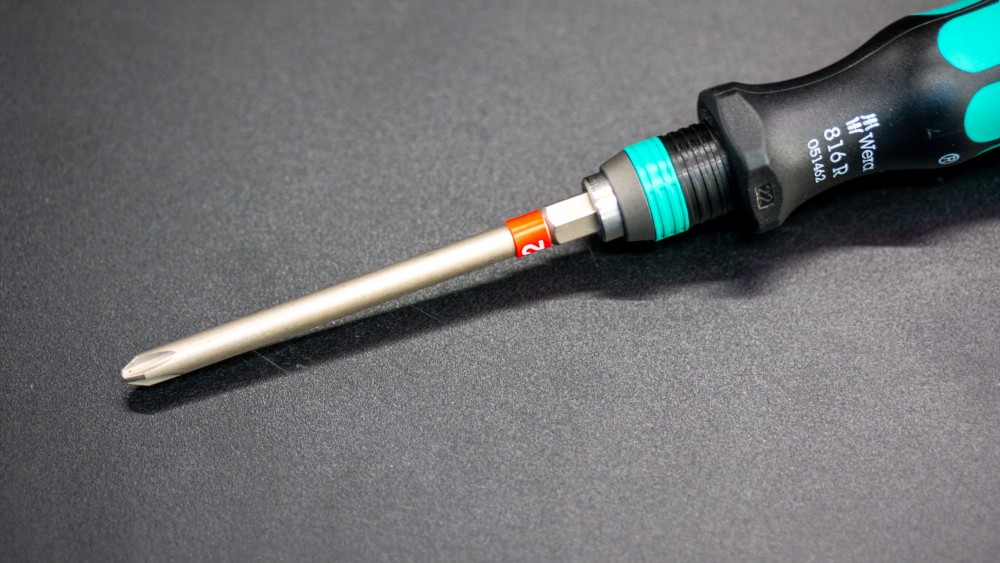
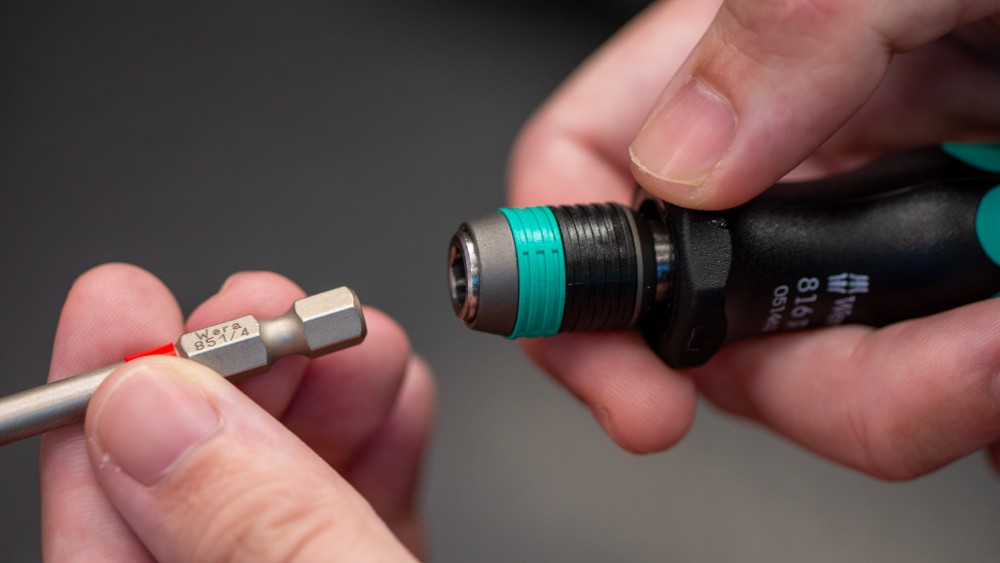
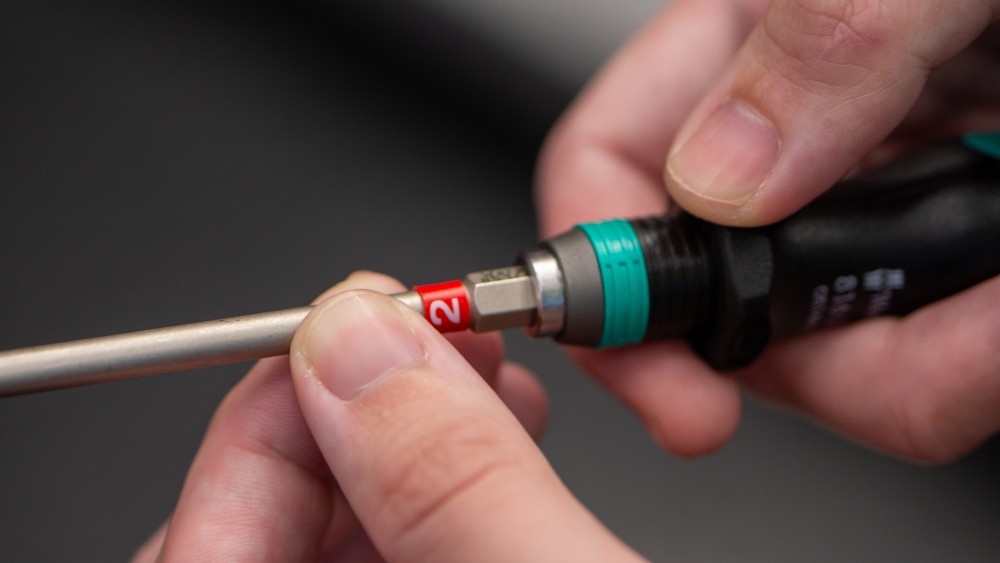
With the wide array of screwdriver tip options available, it is essential to choose the tip shape and size that best matches your screw. Due to its shape, the screwdriver tip requires more strength than the shank. Additionally, screwdriver tips are often interchangeable, allowing you to use a single screwdriver for a wider variety of jobs.
Some types of screwdriver tips may be coated with titanium nitride (TiN) to improve surface hardness, reduce friction, and enhance wear resistance, just like with other screwdriver components.
Steps to Choosing the Best Screwdriver
Alright, before you grab a screwdriver to use, let's make a systematic selection first. It might sound like overkill, but this method will save you from unnecessarily dusting off a carpenter's tool collection or rummaging through an engineer's essentials. To choose the right screwdriver for you, follow these 8 engineer-friendly screwdriver selection steps (wait... what is it...?)
Step 1 - What is it used for?
We want you to know what screw you are about to tighten or loosen... and you're not just looking for something to poke your screwdriver into, right? Are you working on small electronics, home repairs, or a large outdoor construction project? Your task will dictate the shape, size, and quality of the screwdriver you need.
Step 2 - How many screws?
If you have a lot, you'll want something comfortable. Are they tiny and fiddly? You might need something stiffer and easier to control for greater precision. Or if it's a one-off job, don't let us stop you from improvising... and trying things you probably shouldn't.
Step 3 - What is the material?
Put simply, how much torque do you need? Of course, the screw size plays a fair role. Will there be regular vibration, or is there a risk of electric shock? This will affect the screwdriver's strength and the type of grip.
Step 4 - Choose your size
Are you using a small or large screwdriver? Is it easy to hold? Or barely visible? For small, delicate tasks, try a precision screwdriver. For heavy turning, try a grip you can wrap your hand around. Or for tight spaces, try a screwdriver with a shaft long enough to reach the screw.
Step 5 - Choose your screwdriver tip type
What type of screw are you using? Phillips? Slotted? Hex? Match the screwdriver tip shape to your screw. If possible, test it to ensure a proper fit. In awkward spaces, a magnetic tip can help hold the screw in place. But if you are working near sensitive electronics, you shouldn't do that.
Step 6 - Choose your quality level
How specialized is your problem? Is your screwdriver likely to be pushed to its limits? Quality screwdrivers are more durable and less likely to break or strip screws during use.
Step 7 - Choose your screwdriver type
Finally, choose the type of screwdriver that best suits you.
"Pass me a screwdriver"—but which one?
There are countless screws, and just as many types of screwdrivers. Knowing what screws exist and what they do will help you find the right tool for the job. Let's see what types of screwdrivers there are.
Frequently Asked Questions about Screwdrivers
Are screwdrivers magnetic?
Some screwdrivers are magnetic. The main benefit of a magnetic tip is that it keeps the screw in place while you are driving it in.
Are screwdrivers insulated?
Some screwdrivers feature plastic or rubber insulation over the shaft and handle. This is useful when working with electricity, as it helps protect you from electric shocks when working on live equipment.
Why do screwdrivers have different lengths?
Screwdrivers with long shanks and handles give you more twisting force, but prevent you from driving screws in hard-to-reach places. Long and short screwdrivers allow you to drive screws regardless of position.