


 EN
 ไทย



Customers Also Purchased



Kärcher is a globally recognized brand renowned for its high-quality cleaning equipment and outstanding innovations. From humble beginnings in Germany to becoming a market leader in cleaning technology, Kärcher's journey is a remarkable story of dedication and excellence. In this article, I'll take everyone through Kärcher's background and its innovations in the cleaning industry.
History of Kärcher
Since its inception Karcher It has always been known as an inventive and innovative company. In 1935, German engineer Alfred Kärcher founded the company on the outskirts of Stuttgart.
He began manufacturing and marketing pioneering product ideas in the field of heating technology. The cornerstone of its development into a world-leading cleaning specialist was laid in 1950 with the breakthrough invention of Europe's first hot-water high-pressure cleaner.
When Alfred Kärcher passed away in 1959, his wife Irene continued her husband's life's work until her own death in 1989. Kärcher remains a family-managed business to this day, with its headquarters located in Winnenden, near Stuttgart, Germany.
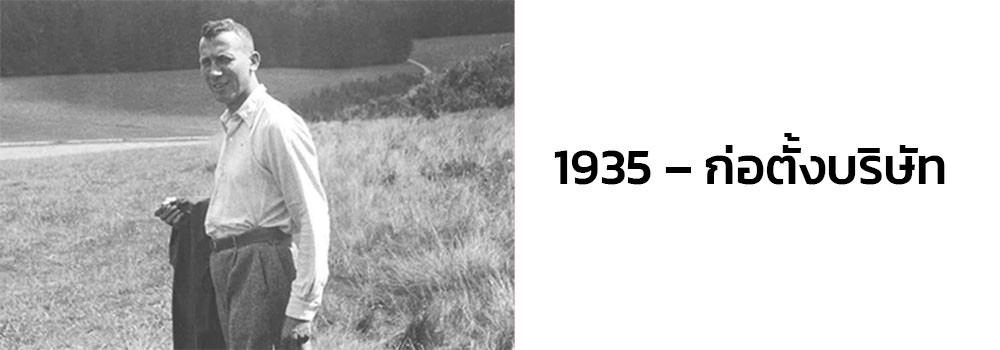
1935
After working at his father's company for nearly 11 years, Alfred Kärcher founded his own company in Stuttgart-Bad Cannstatt in 1935. The limited partnership Alfred Kärcher developed innovative hot-air blowers for preheating aircraft engines. Prior to this, the engineer had attracted attention with safe and economical industrial furnaces.
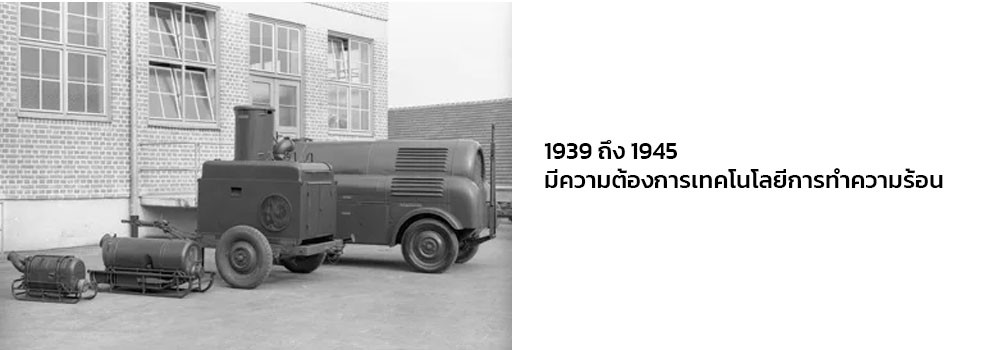
1939 to 1945
The growing aviation industry had an increasing demand for Kärcher's innovative heating technology. On June 1, 1939, Alfred Kärcher moved into a new plant in Winnenden with 120 employees. With the outbreak of war, the company became involved in the armaments industry, producing cabin heaters as well as wing and tail de-icing equipment for the German Air Force. Nebuliser nozzles for Mercedes-Benz engines and mobile heaters for warming small engines were also developed in Winnenden.
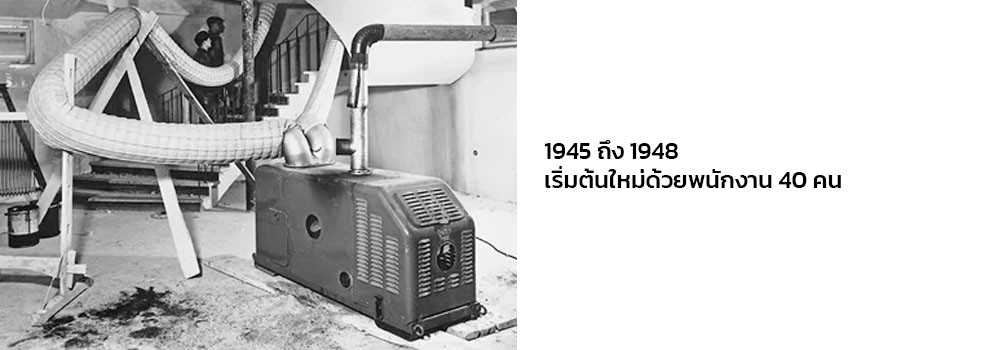
1945 to 1948
After the war, the company was placed under trust for a short period. Alfred Kärcher abandoned the idea of selling the company and instead, with 40 employees, began producing goods to meet urgent post-war needs.
Initially, stoves and handcarts were produced for the needy population. Later, for the reconstruction of destroyed cities, heated concrete formwork and fresh-air heaters for construction drying were introduced, which were also used to heat halls, tents, and stables. The number of employees grew to 141 by 1948.
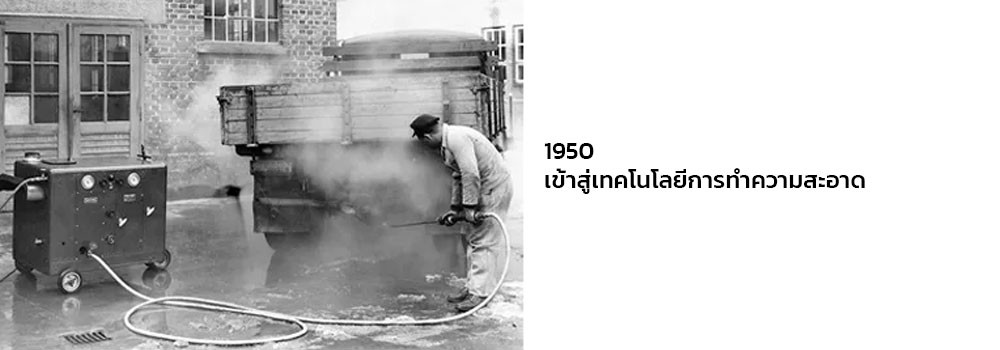
1950
In 1950, Alfred Kärcher made a breakthrough in cleaning technology with the development of Europe's first hot-water and cold-water high-pressure cleaner (the "DS 350" steam blaster). The water-heating design proved so forward-looking that it remains the basis for all burners today. The machine laid the foundation for the company's future.
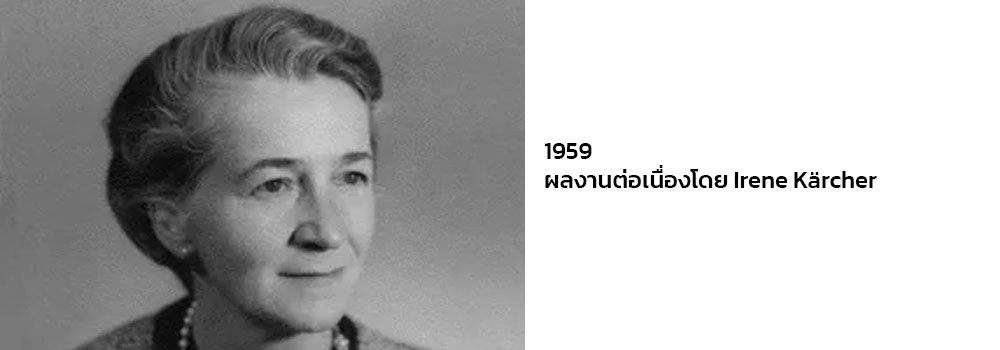
1959
Following the death of Alfred Kärcher, his wife Irene Kärcher took over the business. With great foresight, she steered the company toward "cleaning," a fundamental human need. She was awarded the Federal Cross of Merit for her business leadership. Posthumously, the business newspaper "Handelsblatt" inducted Irene Kärcher as the first woman into its "Hall of Fame."
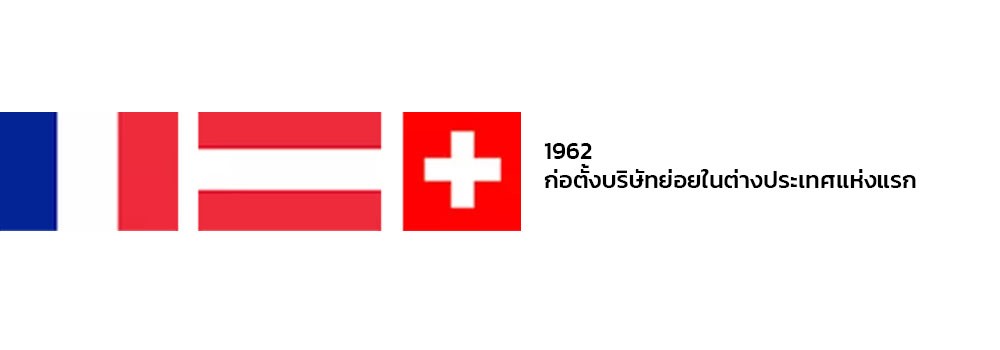
1962
During the 1930s, Kärcher products were already in demand abroad. The export business was initially handled centrally through Winnenden. The establishment of the first foreign subsidiary in France in 1962 marked the beginning of its international expansion, followed by sites in Austria and Switzerland.
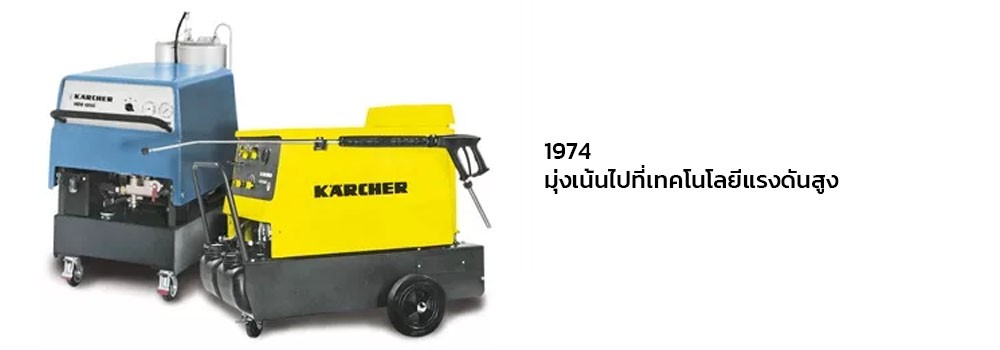
1974
The early 1970s was a period of transition for Kärcher. The era of steam generators, which had previously been a major revenue driver, was coming to an end. In 1974, management decided to forge ahead and focus on high-pressure technology for professional users, discontinuing all other product lines. At this stage, the machine color was changed from hammer-finish blue to the Kärcher yellow that is globally renowned today.
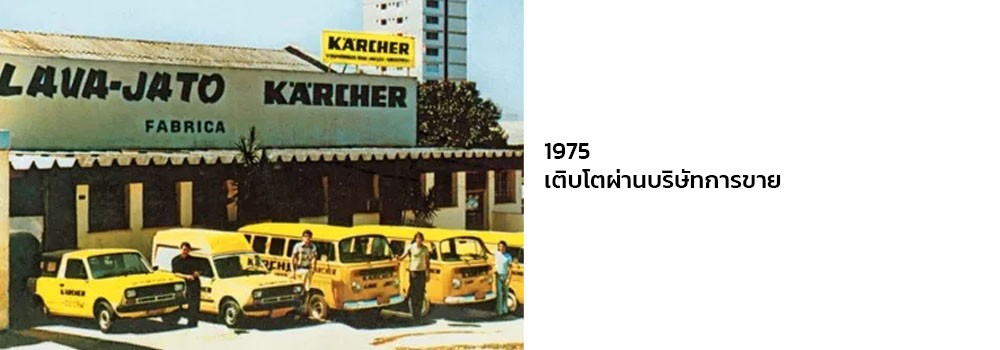
1975
In 1975, the first manufacturing plant outside Germany was opened in Brazil. Ten years later, 16 sales companies were established, including in North America, Africa, and Australia.
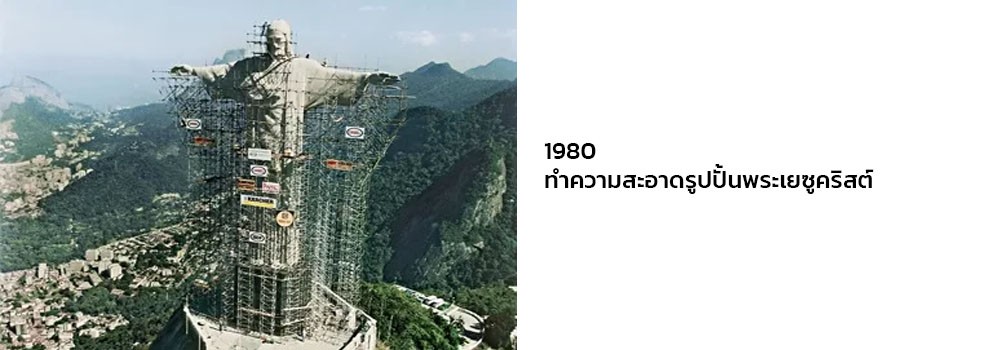
1980
In 1980, Karcher began sponsoring cultural projects by cleaning the Christ the Redeemer statue in Rio de Janeiro. Since then, more than 140 cultural monuments worldwide have been cleaned. In the same year, the strategy shifted toward "cleaning" based on fundamental needs. The product focus was adapted to the new agenda and initially transferred to transport and building applications.
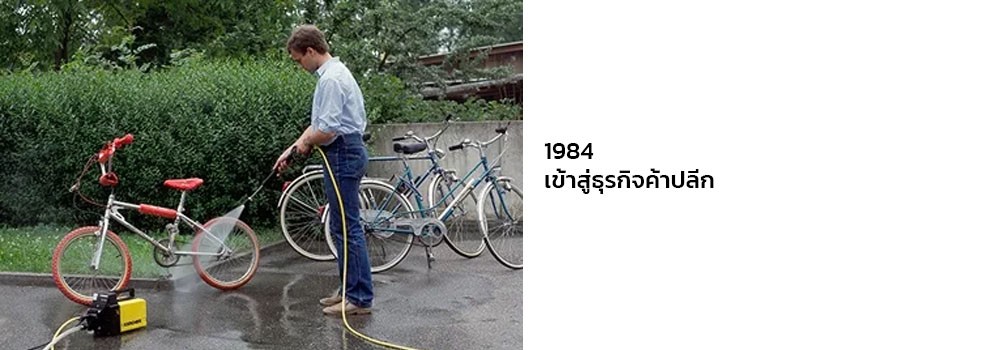
1984
In 1984, Karcher introduced the world's first portable high-pressure cleaner for private households. High-pressure cleaning just like professionals convinced 5,000 customers in the first year. With sales of more than 300,000 machines, the innovative "HD 555" laid a solid foundation for a successful retail business. For the first time, Karcher products were available in hardware and DIY stores.
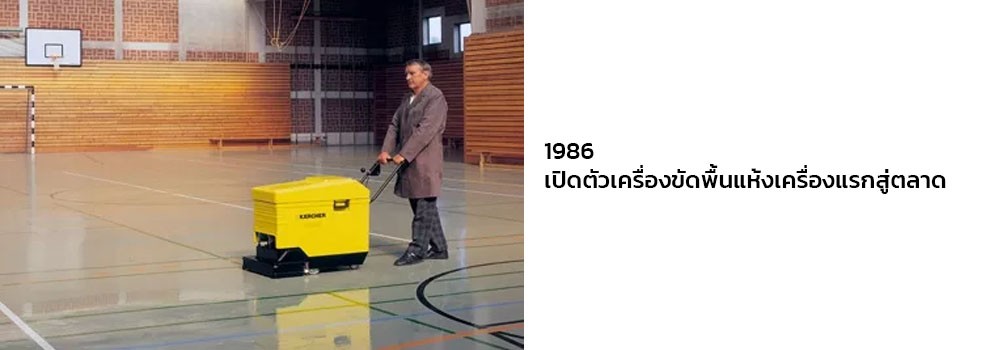
1986
In 1986, Karcher set standards in the commercial sector by launching the BR 450 floor cleaner. It featured innovative roller brush technology, which is now used in more than 50% of all machines in the global market. Developing scrubber dryers in-house established the foundation for one of the company's most important business segments today.
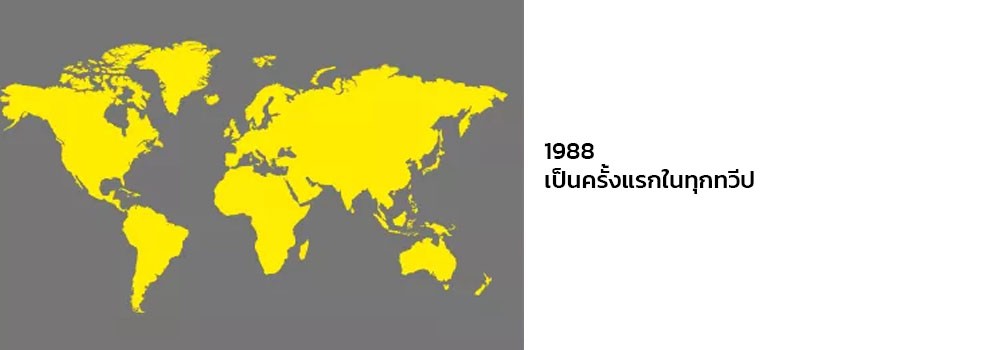
1988
With the newly established foreign subsidiary in Japan, Karcher was represented on all continents for the first time in 1988.
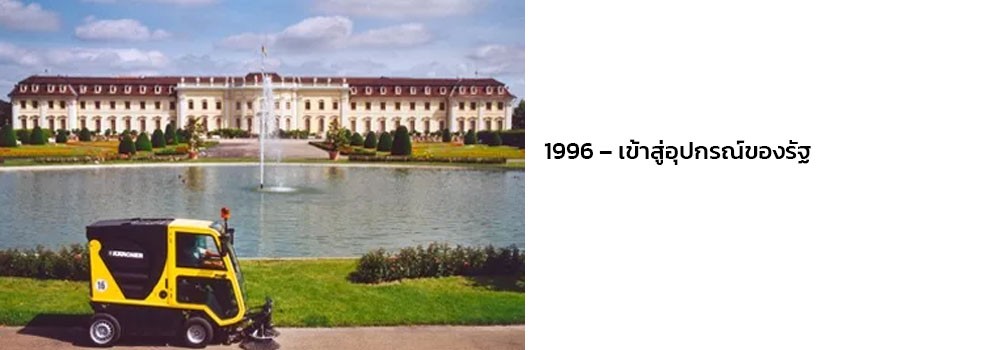
1996
The first vacuum sweeper, the ICC 1, marked the entry into the new "Municipal Equipment" business segment. This was followed by implement carriers across various performance classes used for winter service, green space maintenance, or wet cleaning.
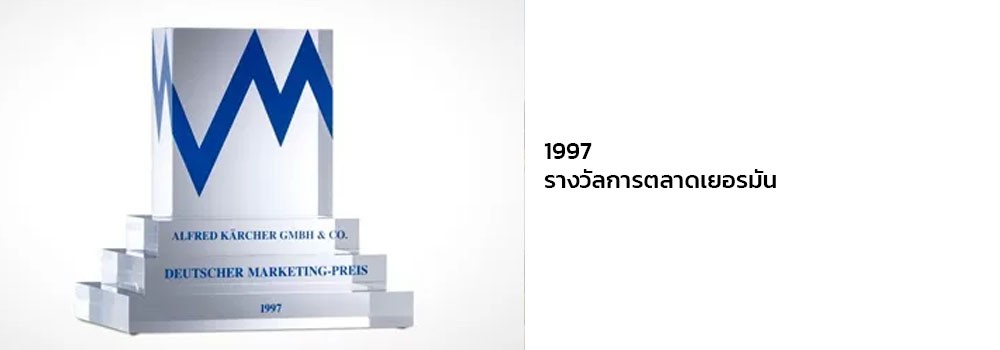
1997
In 1997, Karcher received the German Marketing Award for the first time, recognizing its outstanding achievements in marketing that laid the foundation for the company's financial success.
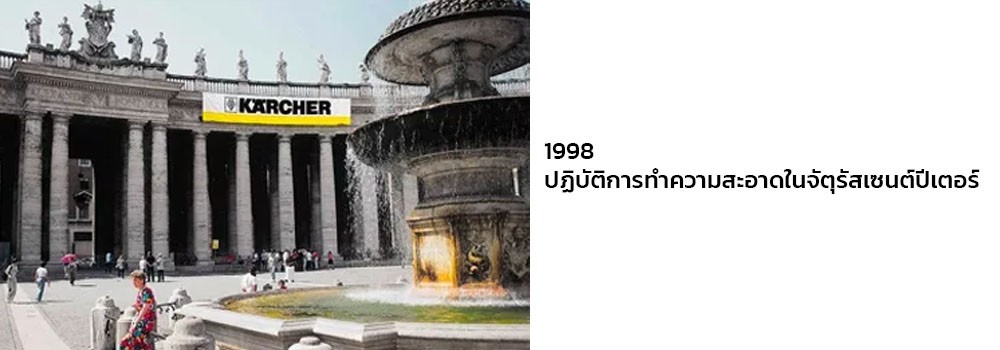
1998
Work on the 284 marble columns and 88 pillars along the colonnades of St. Peter's Square in Rome, as part of our cultural sponsorship initiative, took nine months. Covering a total area of 25,000 square meters, to this day it remains the most extensive facade cleaning project ever undertaken and was recorded in the Guinness Book of Records.
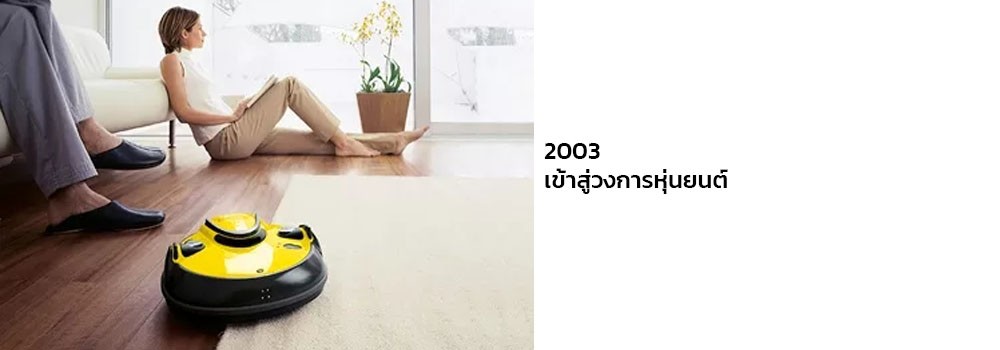
2003
New ground was broken in 2003 with the launch of the RC 3000, the first fully autonomous robotic cleaner for households, onto the market.
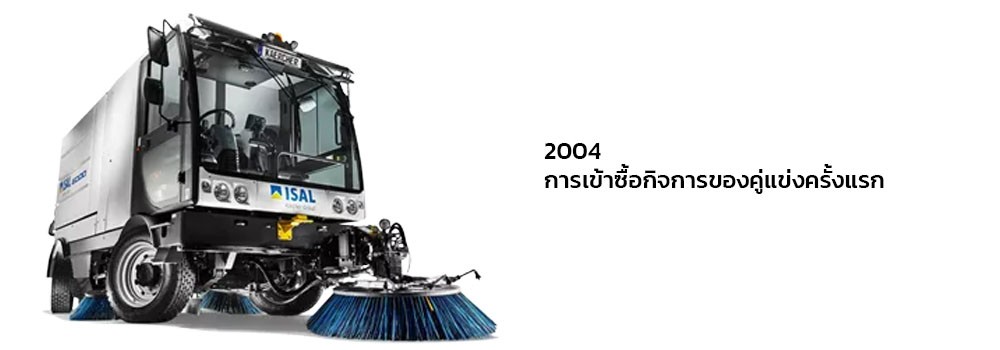
2004
In North America, Karcher was able to become the market leader in high-pressure cleaning and textile floor cleaning through the takeover of two competitors. Since 2011, further acquisitions have helped bring specialized know-how to the company, such as in the field of industrial cleaning requirements.
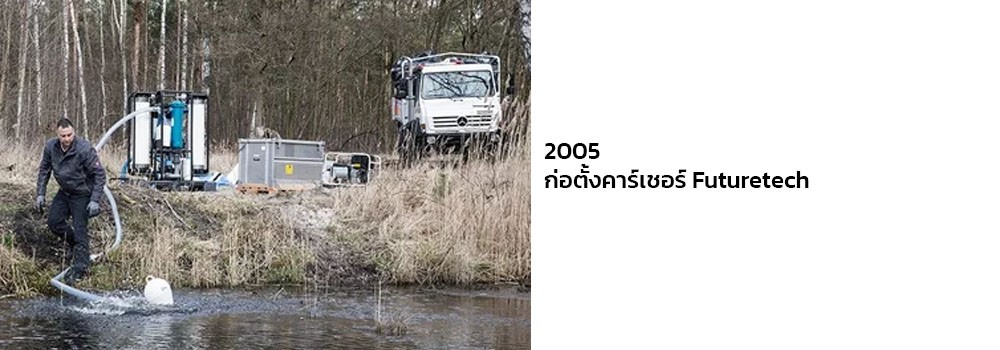
2005
A separate division for special customer groups, including the military market, civil defense, and disaster management, was established in the 1970s. Due to the steady growth of this in-house division, the independent subsidiary Kärcher Futuretech was founded in 2005 and still maintains close ties with Karcher.
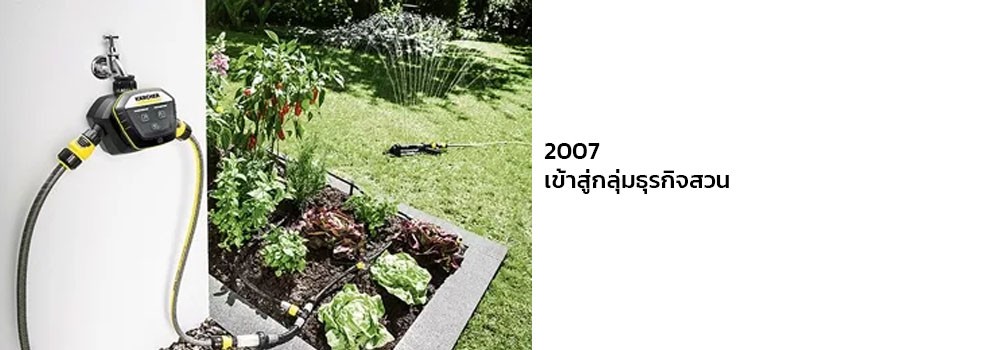
2007
Water delivery was the focus of the garden business segment. In 2007, Karcher entered this market with 22 pump models for private households. In addition to pumps, the product range now includes hoses, spray guns, sprinklers, and watering systems.
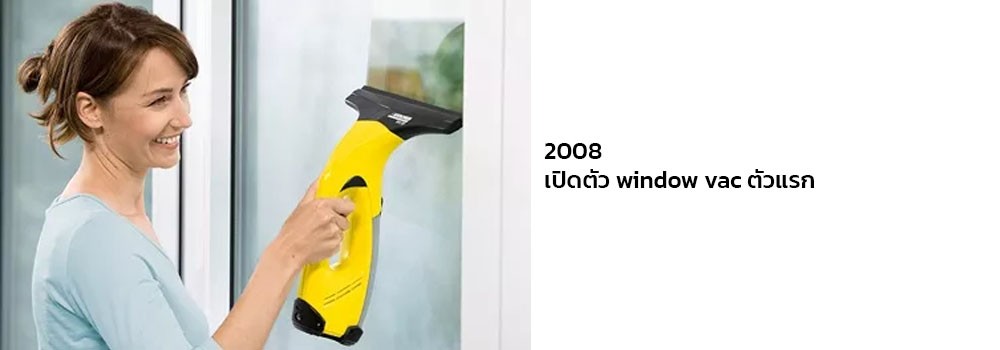
2008
With the launch of the first window vacuum, the WV 50, Karcher was able to fill a market gap and successfully establish a machine for window cleaning. To date, the window vac has satisfied more than 21 million customers.
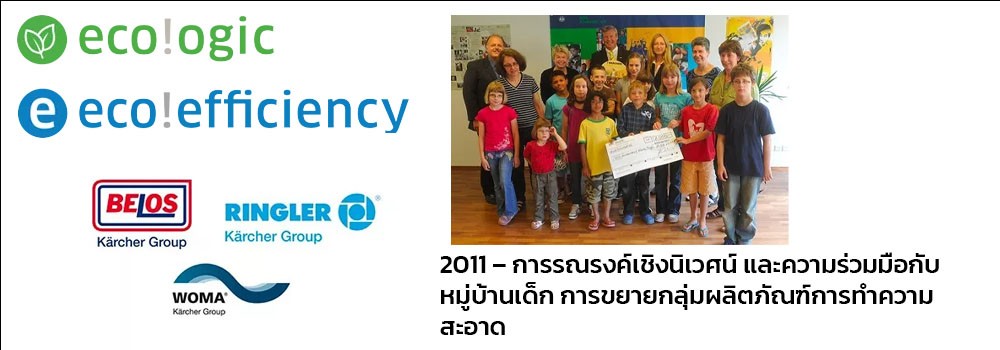
2011
In 2011, the first resource-friendly product range was introduced to the market. These devices consume less energy and water, are made from recycled materials, and are at least 90% recyclable.
Since 2011, Karcher has been supporting SOS Children's Villages with its technology and expertise. As a cooperation partner, we help build happy homes for disadvantaged children and young people worldwide.
In 2011, the 50th sales company was established in Kazakhstan. In the same year, Kärcher acquired Belos (municipal equipment), Ringler (industrial vacuum cleaners), and WOMA (high-pressure technology). These companies' highly specialized cleaning solutions complement the product range for customers in industrial and construction sectors.
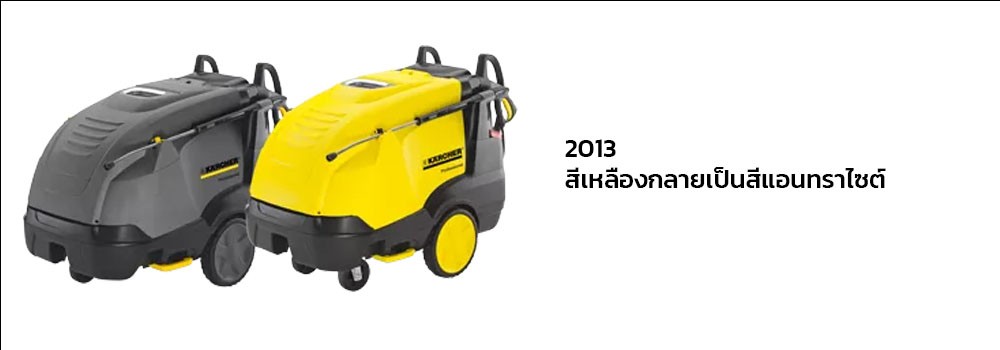
2013
Another change in corporate color: since 2013, machines for professional applications have been anthracite instead of yellow, making it easier to distinguish them from consumer products, which remain yellow. Anthracite also blends in well with environments and is less sensitive to dirt.
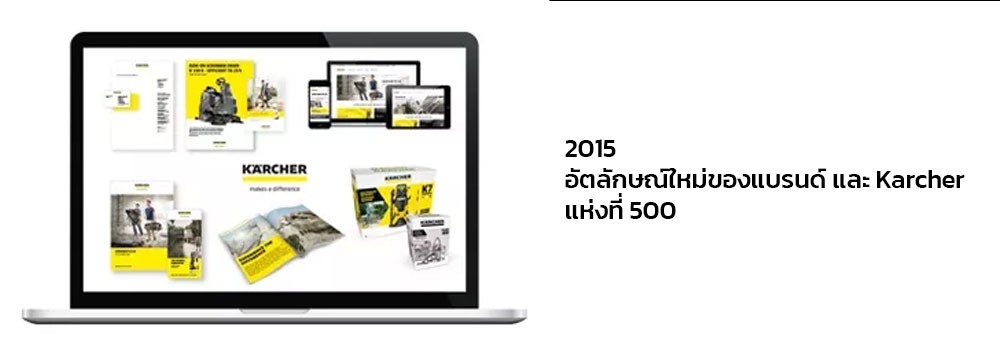
2015
In 2015, Kärcher developed a new corporate design. The brand identity is strong, fresh, and straightforward. The logo features a modern font that is easier to read, especially on screens. In the same year, the 500th Kärcher Center opened in Saigon, Vietnam.

2016
With Connected Cleaning, the fleet management systems of Kärcher Fleet and Kärcher Manage were combined. By bringing the software together, these modules create efficient synergy: manual and machine cleaning, job locations, operational planning, reporting, and service, allowing control over the entire cleaning fleet infrastructure.

2017
In 2017, Karcher founded its own IT consulting company under the name Zoi TechCon GmbH. As a young employer in the heart of Stuttgart, with offices in Berlin and Lisbon, the company focuses on digital solutions development, cloud transformation, and electrical engineering.
2018
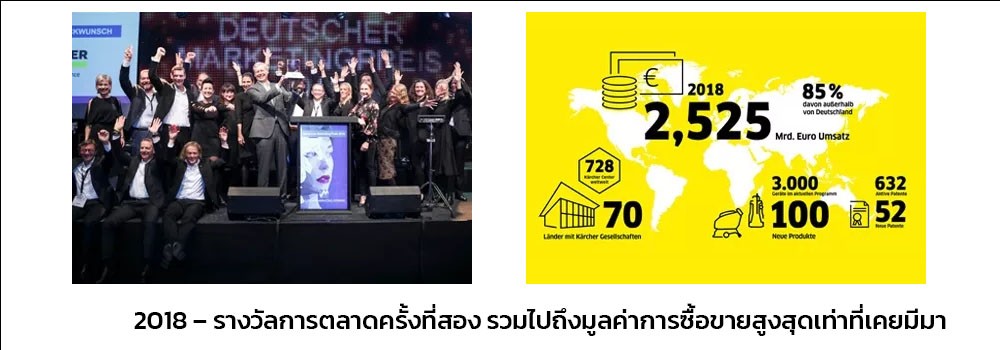
In 2018, Karcher received the German Marketing Award for the second time, making it the only recipient in the award's history to do so. The award honors branding achievements over the past 10 years; an integrated marketing concept and the use of relevant marketing tools and technologies were key to this award.
In 2018, Alfred Kärcher SE & Co. KG achieved a turnover of 2.525 billion euros, the highest in its history. For the first time, more than 13,000 employees worked across 120 companies and 70 countries. Over 50,000 service outlets guaranteed continuous product supply to customers worldwide.
2019
Karcher strengthened its digital portfolio by acquiring Berlin-based startup "SoniQ Services". With the "SQ ONE" service platform, building cleaning service providers can map their entire business processes digitally and work more efficiently.
Synergistic effects in development, purchasing, manufacturing, and sales: Max Holder GmbH is one of the world's leading manufacturers of multifunctional system vehicles for winter maintenance, sidewalk cleaning, environmental care, as well as numerous special applications. Since September 2019, Holder has been part of the Karcher Group.
Conclusion
The journey of Karcher from a small company in Germany to a global leader in cleaning technology is a story of innovation, quality, and dedication. Over the past eight decades, Karcher has continuously set new standards in the cleaning industry by offering efficient, reliable, and sustainable cleaning solutions. The company's legacy of excellence continues to shape the future of cleaning technology, making life easier and cleaner for people around the world.